A home chimney water leak in Waterbury usually shows up as a brown ceiling stain near the fireplace, white mineral crust (efflorescence) on the brick, or a damp smell after a Nor'easter blows rain against the north…
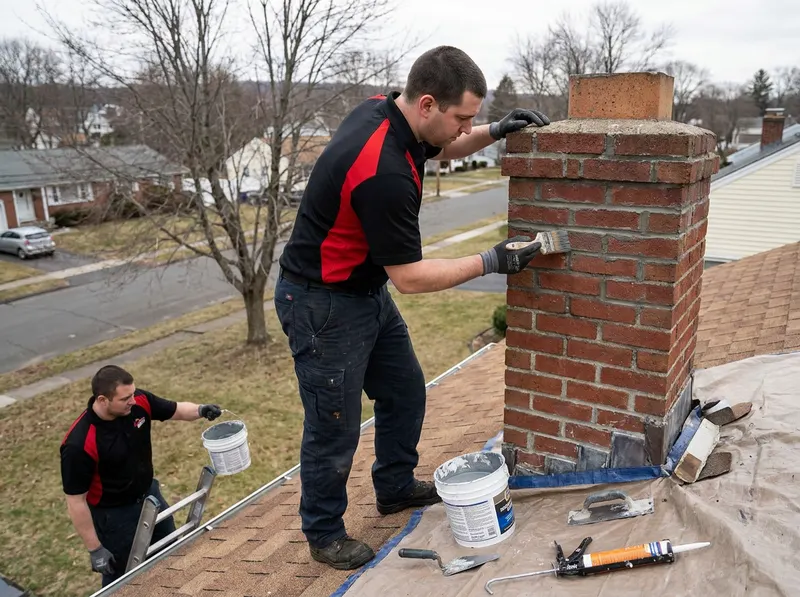
A home chimney water leak in Waterbury usually shows up as a brown ceiling stain near the fireplace, white mineral crust (efflorescence) on the brick, or a damp smell after a Nor'easter blows rain against the north face. The Chimney Safety Institute of America (CSIA) identifies four leak sources, and the fix depends on which one is failing. A cracked concrete crown, the slab on top of the chimney, is the most common culprit on the older 1920s, 1950s masonry chimneys around Overlook and Bunker Hill; a crown seal or rebuild runs about $175, $500. Failed flashing, where the chimney meets the roof, is the leading cause on the newer builds in Country Club and Berkeley Heights; resealing costs about $150, $400, while full step-flashing replacement is higher. A missing or rusted cap lets rain straight down the flue; a new stainless cap is roughly $150, $350 installed.
Waterproofing is a separate step from repairing a specific crack. Brick and mortar absorb water like a sponge, and Waterbury's freeze-thaw winters, dozens of cycles between December and March, expand that trapped water and spall the masonry face. A vapor-permeable siloxane sealant, the type CSIA recommends, lets the chimney breathe out moisture while blocking rain from soaking in. Ordinary paint or a non-breathable sealer traps water behind the brick and makes spalling worse, which is why the product choice matters. Waterproofing suits a chimney whose brick is sound but porous; it does not fix an active crack, so a cracked crown gets sealed or rebuilt first, then the stack is treated.
Deciding what you actually need starts with finding the water's true entry point, since a stain inside the Town Plot or East End living room can trace to a source three feet higher on the roof. If the leak appears only during wind-driven rain and the brick looks weathered, waterproofing is often the answer. If water drips down the firebox after every rain, the cap or crown is the likely path. If the stain sits at the ceiling line where the chimney passes through, flashing is the first suspect. A Level 1 inspection covers readily accessible areas and is standard for a straightforward leak; a Level 2 inspection, which includes attic and roof spaces and a flue scan, is used when the source is hidden or the chimney has changed. These inspection levels are defined in NFPA 211, the national standard for chimneys and venting.
A leak diagnosis follows a set order: first the exterior crown, cap, and flashing are checked from the roof; second the brick and mortar joints are examined for cracks and spalling; third the flue and firebox are inspected for water tracks; and fourth the entry point is confirmed before any repair or waterproofing is quoted. A free on-site estimate covers this diagnosis with no charge and no obligation, and it names the specific repair rather than a vague 'the whole chimney needs work' answer. Homes across Brooklyn, Hopeville, Long Hill, and Bucks Hill sit under the same New Haven County weather, so the same four leak paths apply regardless of neighborhood.
Every job gets a firm, written price after a free on-site visit.
Tell us about your chimney leak repair & waterproofing job in Waterbury and we'll send a clear, written quote, usually the same day.
 Soot Stopper Chimney Sweep