Chimneys in Waterbury draw wildlife because an uncapped flue reads like a hollow tree. Chimney swifts nest inside masonry flues from spring through late summer, and the Migratory Bird Treaty Act protects active nests,…
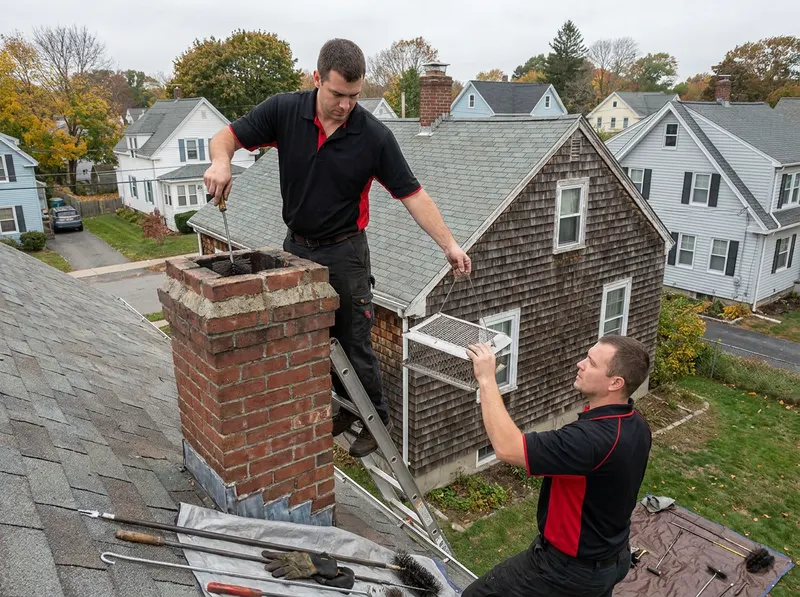
Chimneys in Waterbury draw wildlife because an uncapped flue reads like a hollow tree. Chimney swifts nest inside masonry flues from spring through late summer, and the Migratory Bird Treaty Act protects active nests, a nest with live young or eggs cannot be legally removed until the birds fledge, so timing changes the plan. Once a flue is empty, the standard fix is a stainless steel cap with mesh sides. The Chimney Safety Institute of America (CSIA) treats a capped chimney as the primary barrier against animal entry, and a NFPA 211 spark arrestor cap with 316 stainless mesh serves two jobs at once: it stops embers from landing on a roof and blocks squirrels, raccoons, and birds from getting back in.
Decision-fit is straightforward. If a bird has dropped into the smoke chamber or the damper and is still alive, that is a same-visit rescue-and-release job in most cases. If the sound is scratching high in the flue with no droppings below, a raccoon or squirrel may be denning on the smoke shelf, and that calls for a scope of the full flue before anyone reaches in. A season-old nest packed against the smoke chamber blocks draft and is a fire hazard, that is when to clean out the chimney fully rather than only pull the visible material. To keep the raccoons out permanently, the guard matters: a light aluminum builder's cap often fails within a few winters, so a custom, ideally 316 stainless mesh animal spark arrestor sized to the flue tile is the option that lasts on Waterbury's older masonry stacks.
Cap selection depends on the chimney. Homes around Bunker Hill, Overlook, and Town Plot often have single 8x8 or 8x13 clay flue tiles that take a standard bolt-on stainless cap. Larger Country Club and Berkeley Heights masonry chimneys with multiple flues, or a wide crown, frequently need a custom chimney animal guard fabricated to span the whole crown. Older Brooklyn, Hopeville, and East End houses sometimes have crumbling crowns where a cap has to be mounted after the crown is patched, which is flagged on the estimate rather than surprising you later.
How a typical visit runs: first, a Level 1 inspection confirms what is in the flue and whether the animal is alive; second, the nest or bird is removed and the smoke chamber is checked for material dragged down by the animal; third, loosened creosote and debris are swept and vacuumed so the flue is clear; fourth, the flue tile is measured and the correct stainless cap is fitted; fifth, the work area is uncovered and the debris is bagged and carried out. If damage is found, a cracked crown, a missing damper, or heavy creosote, that is documented so you can get some quotes and compare, with no obligation to add work on the spot. The free on-site estimate is confirmed in person because flue count and crown condition change the price.
Every job gets a firm, written price after a free on-site visit.
Tell us about your animal removal & spark arrestor job in Waterbury and we'll send a clear, written quote, usually the same day.
 Soot Stopper Chimney Sweep