A chimney cap is the metal cover bolted or clamped over the flue opening at the top of the chimney. Its mesh screen blocks rain, snow, leaves, birds, and squirrels, and its spark arrestor catches embers. NFPA 211…
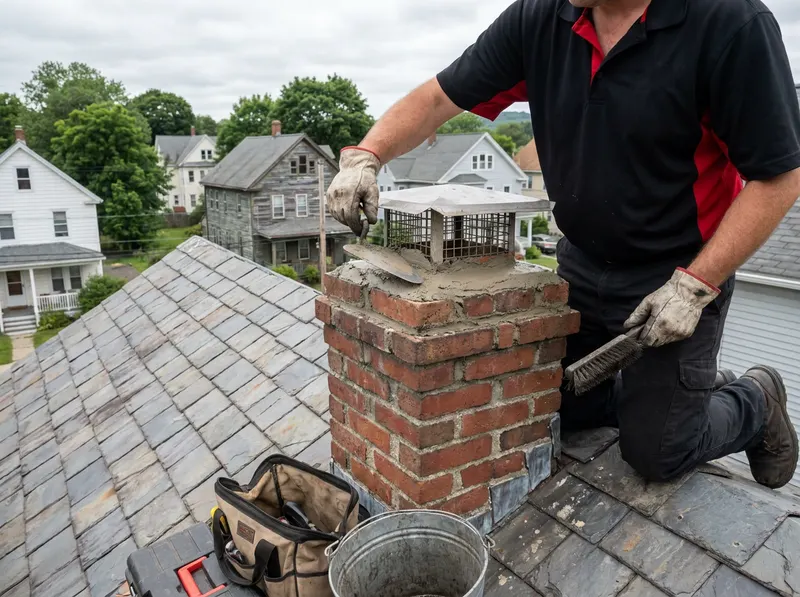
A chimney cap is the metal cover bolted or clamped over the flue opening at the top of the chimney. Its mesh screen blocks rain, snow, leaves, birds, and squirrels, and its spark arrestor catches embers. NFPA 211 treats a spark arrestor and screen as standard fire and animal protection, and the Chimney Safety Institute of America (CSIA) lists a missing or damaged cap as one of the most common reasons water and animals get into a flue. When a Waterbury homeowner in Bunker Hill or Bucks Hill says a windstorm "blew my chimney cap back from my chimney," the fix depends on what the wind did to the cap and the mortar it sat on.
Three situations cover most cap calls. If the cap itself is intact and only the mounting hardware or clamp failed, the job is a reattach, the existing cap is re-seated and secured with new stainless bolts or a friction band, usually the cheapest path. If the cap is dented, rusted through, or its screen is torn, it gets replaced with a new stainless-steel or copper cap sized to the flue. If water stains show on the top course of brick or the concrete crown is cracked, that points to chimney crown repair, because a failing crown lets water run behind the cap no matter how well the cap fits. Damage to the chimney cap and damage to the crown often travel together after a hard freeze-thaw winter, which is common on exposed rooflines in Overlook and Country Club.
Sizing matters. A cap must match the outside dimensions of the flue tile or the round liner it covers, a loose cap on a Town Plot cape rattles and works free again in the next Naugatuck Valley wind. Stainless steel is the standard choice for New Haven County weather because it resists the rust that eats galvanized caps within a few winters. Copper costs more and is chosen mainly to match existing copper flashing on older Hopeville and East End homes.
Here is how a cap visit runs. First, the roof and cap are inspected from the top, following the Level 1 visual check under CSIA and NFPA 211 standards; a Level 2 inspection is added when there was a system change, a chimney fire, or hidden interior damage is suspected. Second, the flue is measured and the crown checked for cracks. Third, the cap is reattached, replaced, or a new one fabricated. Fourth, debris and any old nesting material are cleared from the flue top so the new screen seals clean. A damaged chimney cap is worth a look before winter because a cap that is loose or gone is exactly "something that you guys can take a look at and potentially fix" in a single trip. A free on-site estimate confirms whether the cap needs reattaching, replacing, or whether the crown underneath is the real problem.
Every job gets a firm, written price after a free on-site visit.
Tell us about your chimney cap repair & replacement job in Waterbury and we'll send a clear, written quote, usually the same day.
 Soot Stopper Chimney Sweep