Two inspection levels are recognized under NFPA 211. A Level 1 inspection examines the readily accessible portions of the chimney and connected appliance and fits a chimney used with no changes since its last cleaning.…
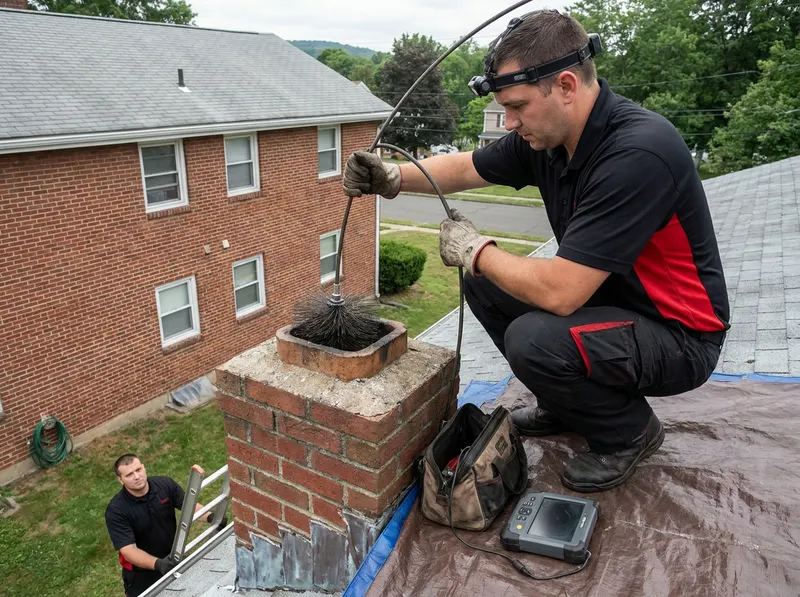
Two inspection levels are recognized under NFPA 211. A Level 1 inspection examines the readily accessible portions of the chimney and connected appliance and fits a chimney used with no changes since its last cleaning. A Level 2 inspection includes everything in Level 1 plus a video camera run down the full length of the flue and a look at accessible attic, crawlspace, and basement sections. The Chimney Safety Institute of America (CSIA) recommends a Level 2 chimney inspection after any chimney fire, after adding or changing a heating appliance, and before a real-estate sale or transfer, three situations where hidden flue damage is common.
Here is how a typical inspection runs. First, the flue and firebox are checked cold and drop cloths go down to keep soot off the floor. Second, the technician measures creosote thickness and notes any glazing, a shiny, tar-like coating that ignites more easily than flaky soot. Third, on a Level 2 job a camera travels the full flue to find cracked tiles or gaps between liner sections. Fourth, the crown, cap, and flashing are checked from the roof or by ladder for water entry. Fifth, findings go into a written report with a chimney inspection and repair estimate for anything that needs attention.
Choosing between levels comes down to your situation. If your fireplace is used every winter with no changes and you smelled a faint smoky odor when you lit the first fire, a Level 1 inspection with a chimney cleaning estimate usually answers the question. If you just bought a home in Overlook or Country Club and no one can tell you when the chimney was last inspected, a Level 2 inspection with the camera scan is the honest choice, the trade-off is a higher fee for a complete internal picture rather than a surface look. Homes in older sections like Town Plot, Brooklyn, and the East End often have clay-tile liners from the mid-1900s that can crack invisibly, which is exactly what the camera catches.
Common findings in Waterbury reflect the housing stock and climate. Multi-family homes across Bunker Hill and Bucks Hill frequently have shared or capped flues that need mapping before use. Freeze-thaw cycles in Hopeville, Long Hill, and Berkeley Heights loosen crown mortar and let water into the masonry. Birds and squirrels nest in uncapped flues year-round. An inspection distinguishes a real hazard from a chimney that is simply due for a routine sweep, an honest report will say when no repair is needed. The free on-site estimate is provided before any inspection fee applies, so you can give the go-ahead once you know the scope.
Every job gets a firm, written price after a free on-site visit.
Tell us about your chimney inspection job in Waterbury and we'll send a clear, written quote, usually the same day.
 Soot Stopper Chimney Sweep